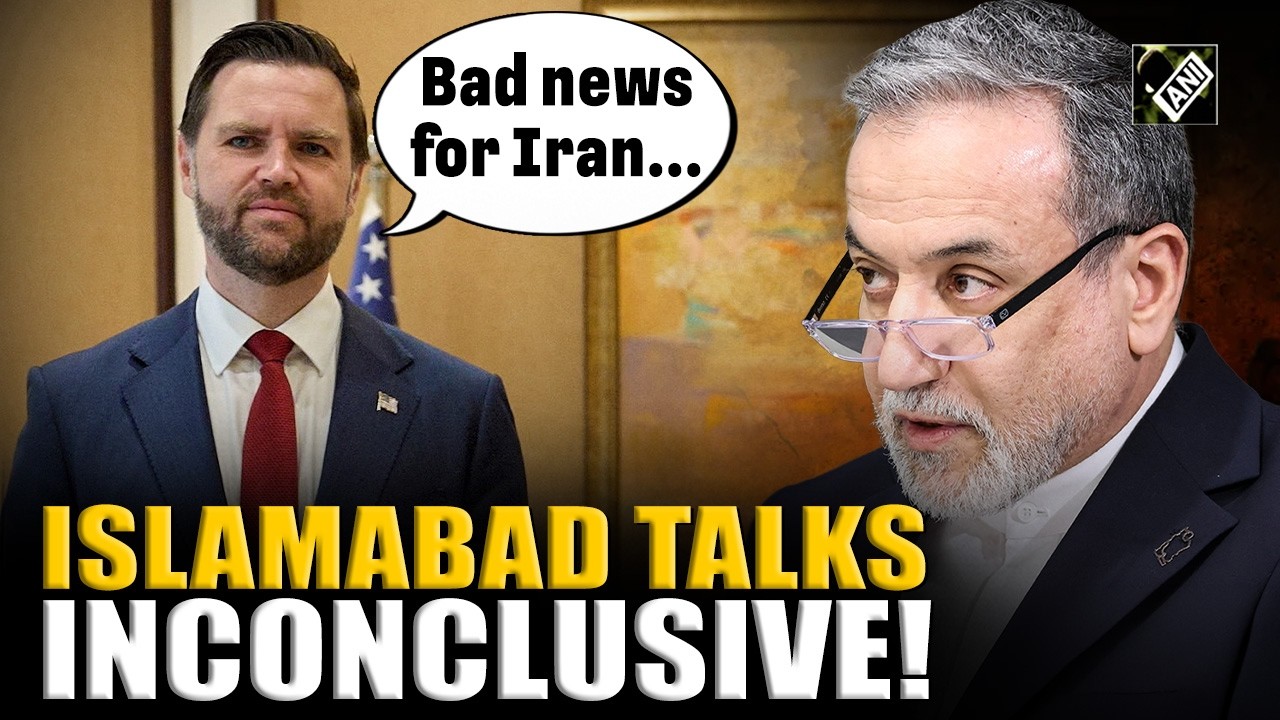
Well, good morning everybody. And let me say a couple of notes of appreciation. First of all, to the Prime Minister of Pakistan and to Field Marshal Munir who were both incredible hosts. And whatever shortcomings of the negotiation, it wasn’t because of the Pakistanis who did an amazing job and really tried to help us and the Iranians bridge the gap and get to a deal. We have been at it now for 21 hours and uh we’ve had a number of substantive discussions with the Iranians. That’s the good news. The bad news is that we have not reached an
agreement. And I think that’s bad news for Iran much more than it’s bad news for the United States of America. So, we go back to the United States having not come to an agreement. We’ve made very clear what our red lines are, what things we’re willing to accommodate them on and what things we’re we’re not willing to accommodate them on. And uh we’ve made that as clear as we possibly could and they have chosen not to accept our terms. Questions. Sir, Nick Robertson from Sky News. Precisely what have they rejected here?
Um can you can you help us understand it a little bit? Well, I won’t go into all the details because I don’t want to negotiate in public after we negotiated for 21 hours in private. But the simple fact is that we need to see an affirmative commitment that they will not seek a nuclear weapon and they will not seek the tools that would enable them to quickly achieve a nuclear weapon. That is the core goal of the President of the United States and that’s what we’ve been trying to achieve through these negotiations. Again, their
nuclear program such as it is, the enrichment facilities that they’ve that they had before, they’ve been destroyed. But the simple question is, do we see a fundamental commitment of will for the Iranians not to develop a nuclear weapon, not just now, not just 2 years from now, but for the long term? We haven’t seen that yet. We hope that we will. Jen. Was there a framework on anything? And also, did the Iranian frozen assets come up and did you reach any conclusions on on those questions? We we talked about all those issues, Jen. And
uh we talked about a number of issues beyond that. And so, certainly those things came up, but again, we we we just could not get to a situation where the Iranians were willing to accept our terms. I I think that we were quite flexible. We were quite accommodating. The President told us, you need to come here in good faith and make your best effort to get a deal. We did that and unfortunately, we weren’t able to make um make any headway. Preston. Mr. Vice President, how often did you communicate with President Trump
throughout the negotiations? There were reports that there were multiple rounds uh where there were breaks in between negotiations. How often did you communicate with the President throughout those rounds and what was he saying as you were going through these negotiations that you said fell short? Yeah, obviously we were we were talking to the President consistently. Um I don’t know how many times we talked to him, a half dozen times, a dozen times over the past 21 hours. We obviously also talked to Admiral Cooper, to Pete,
to Marco, to the entire National Security team. We talked to Scott Morrison a number of times. So, look, we we were constantly in communication with the team because we were negotiating in good faith. And uh we leave here and we leave here with a very simple proposal, a method of understanding that is our final and best offer. We’ll see if the Iranians accept it. Thank you.